Cybersecurity consultations for SMBs
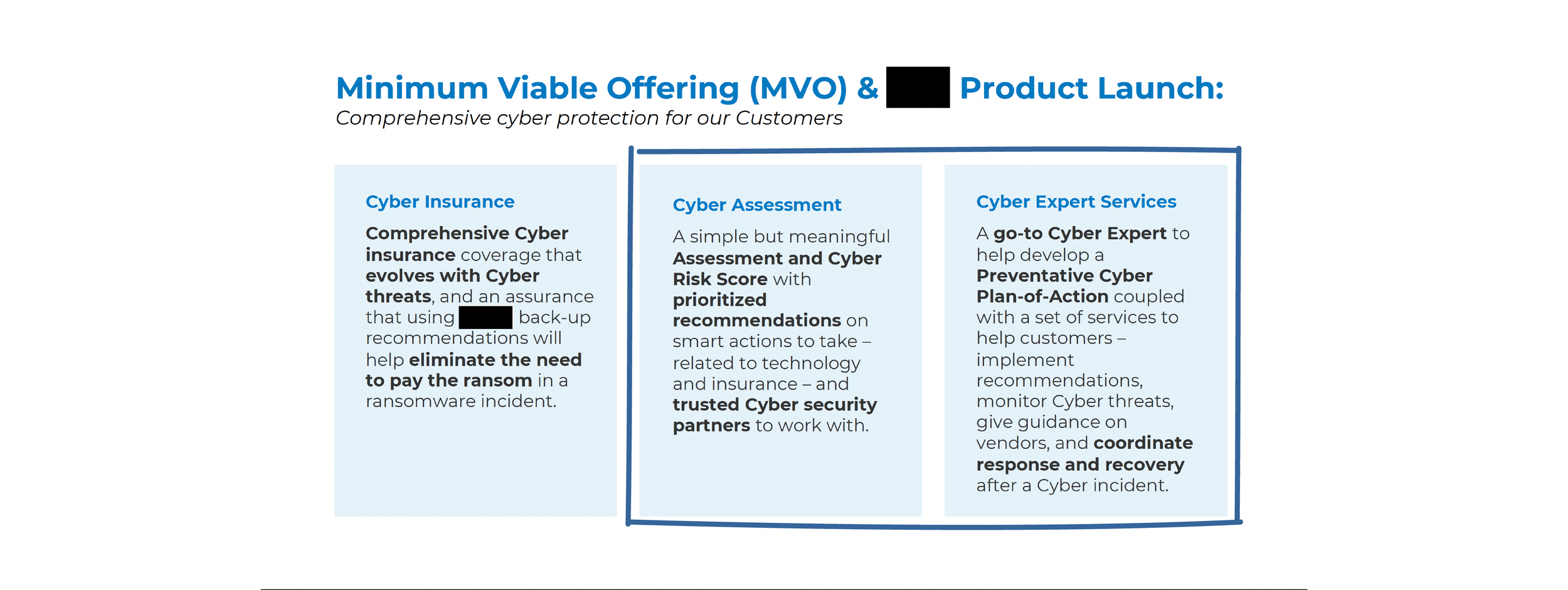
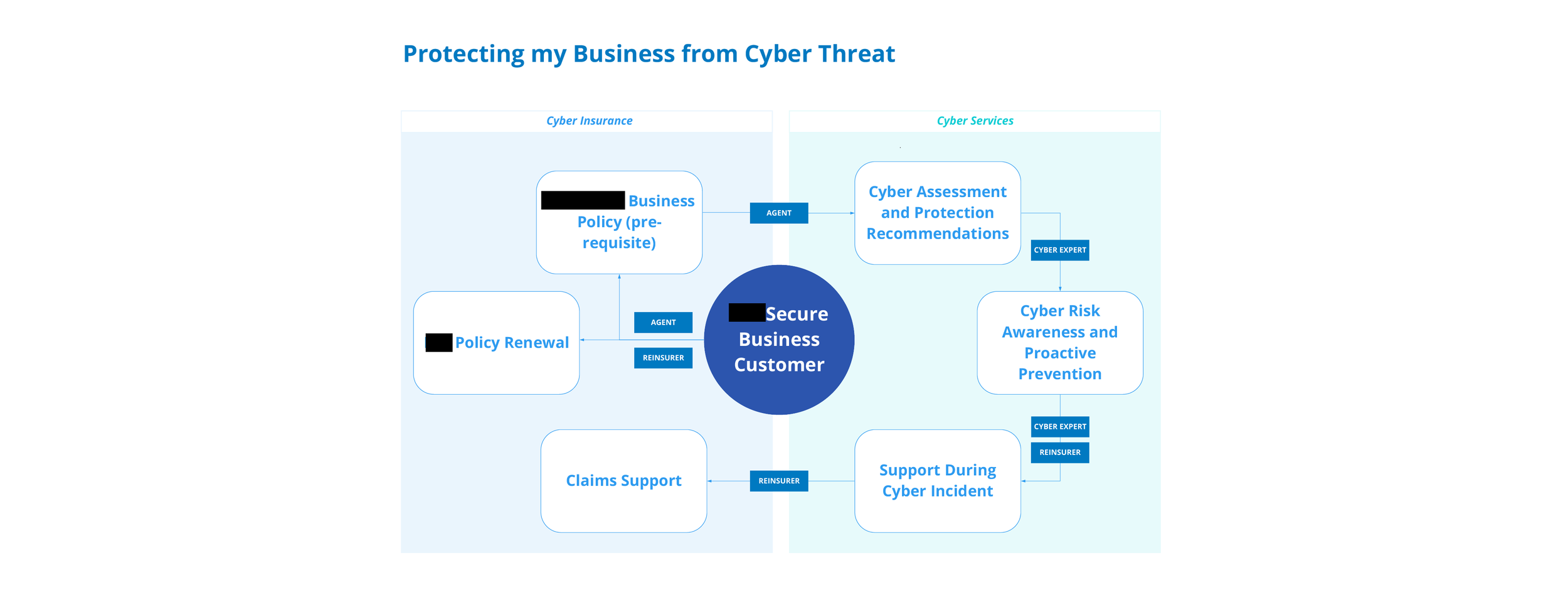
Bringing a minimum-viable offering to life through service definition, capability identification, and guiding capability development while maintaining experience intent.
The effort had to navigate proximity to the parent organization, new ways of (cross-functional) working, lack of uptake by Agents, and finally breaking away from traditional distribution channels.
Industry: Insurance (Innovation)
Type: B2B
Project Type: Service Implementation, Client capability building, Innovation
Horizon line(s): Near-term
Team: 2 Harmonic service designers working alongside two client-partner practitioners being trained in service design, a PM, and an Innovation consultant + extended team at various points.
Role: Design Lead
Learning, coaching, and experimenting with service implementation

Project Timeline
Backdrop
The project was in equal measure the development of a new offering and building skills in the client-team to do this type of work in the future. The goal of up/cross-skilling the client-team is to eventually independently lead the envisioning and development of new innovative non-insurance offerings to meet a certain revenue diversification goal by leveraging human-centered design methods. They chose to center their toolkit in service design and as a result, partnered with Harmonic Design.
Key activities
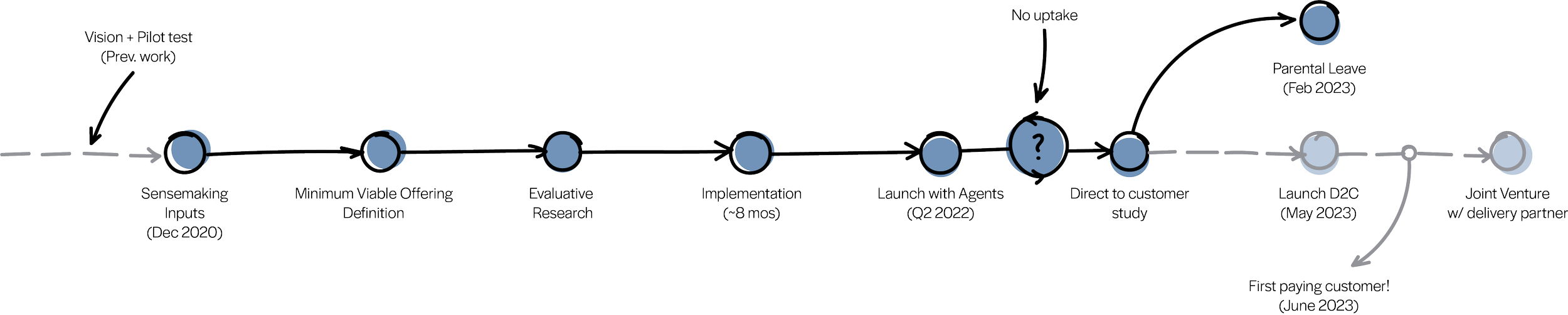
Sensemaking inputs: This opportunity was originally identified by a consulting firm that was a previous partner. In order to make most use of the work, we needed to close some gaps in detailing the minimum viable service.
Development of a proto-blueprint to bring into blueprinting sessions.
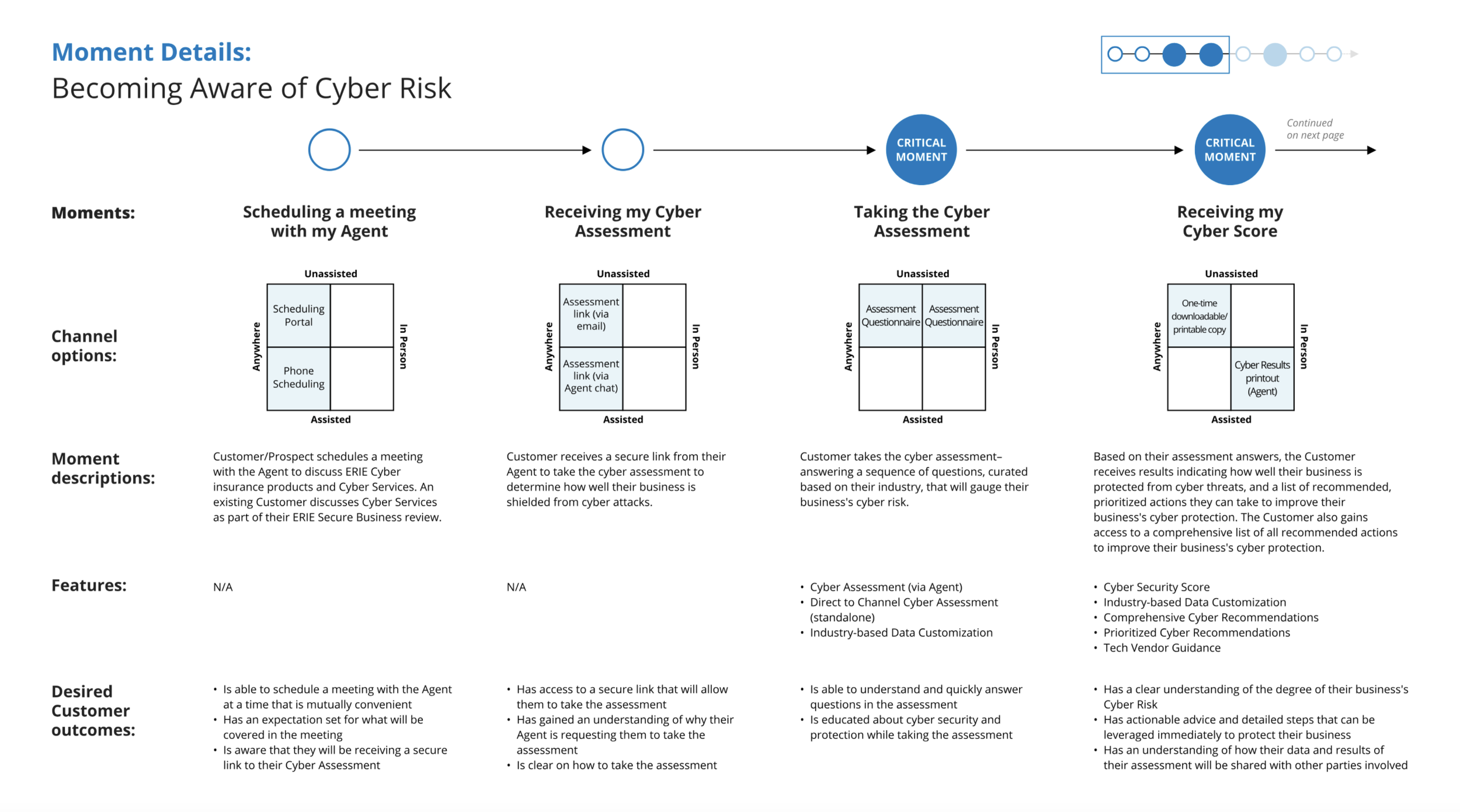
Development of a moment architecture (moment maps, moment descriptions, and outcomes) to ground the service experience.
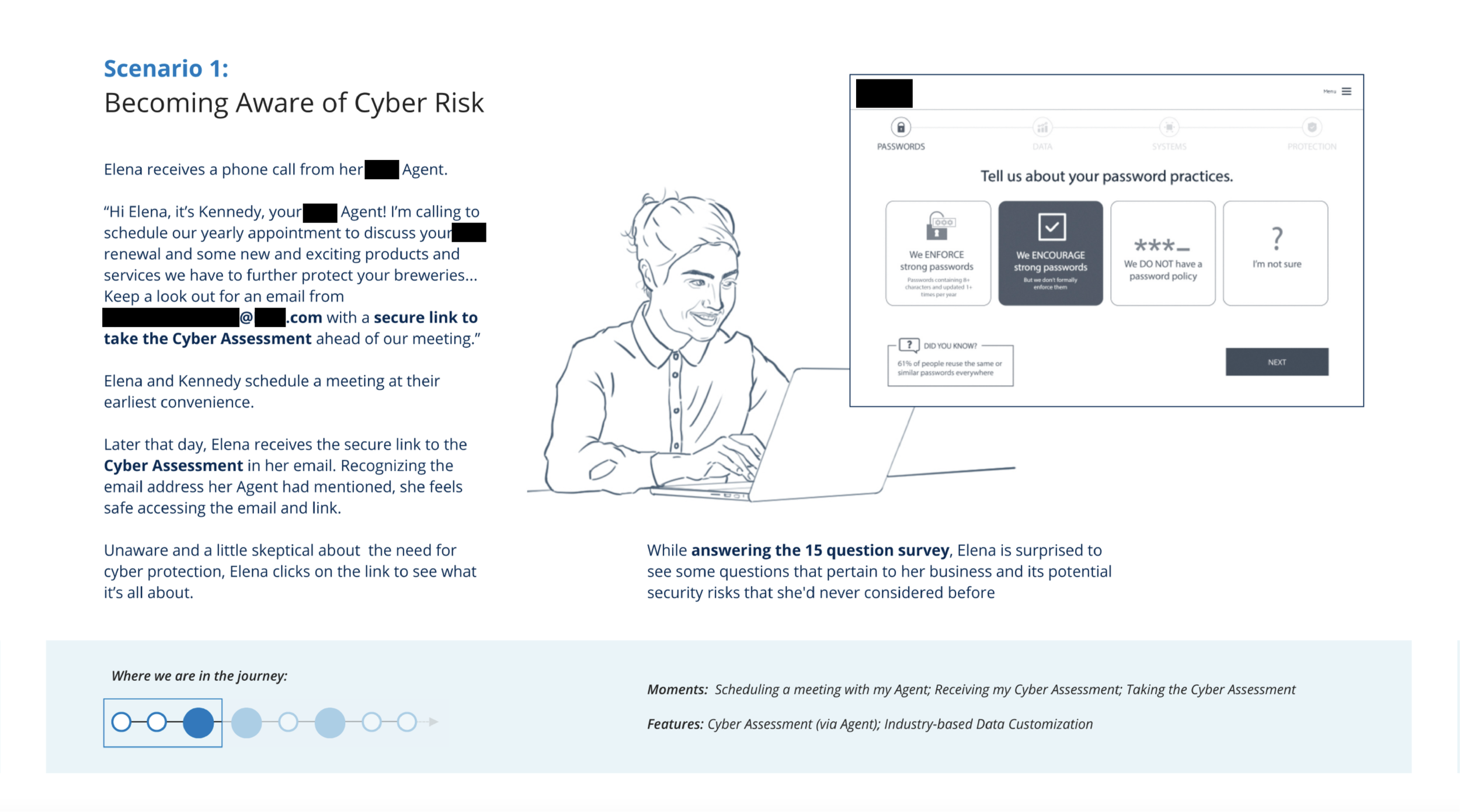
Development of storyboards to visualize the experience and depict service scenarios.
Service definition:
Facilitating service blueprinting to detail the Minimum Viable Service experience
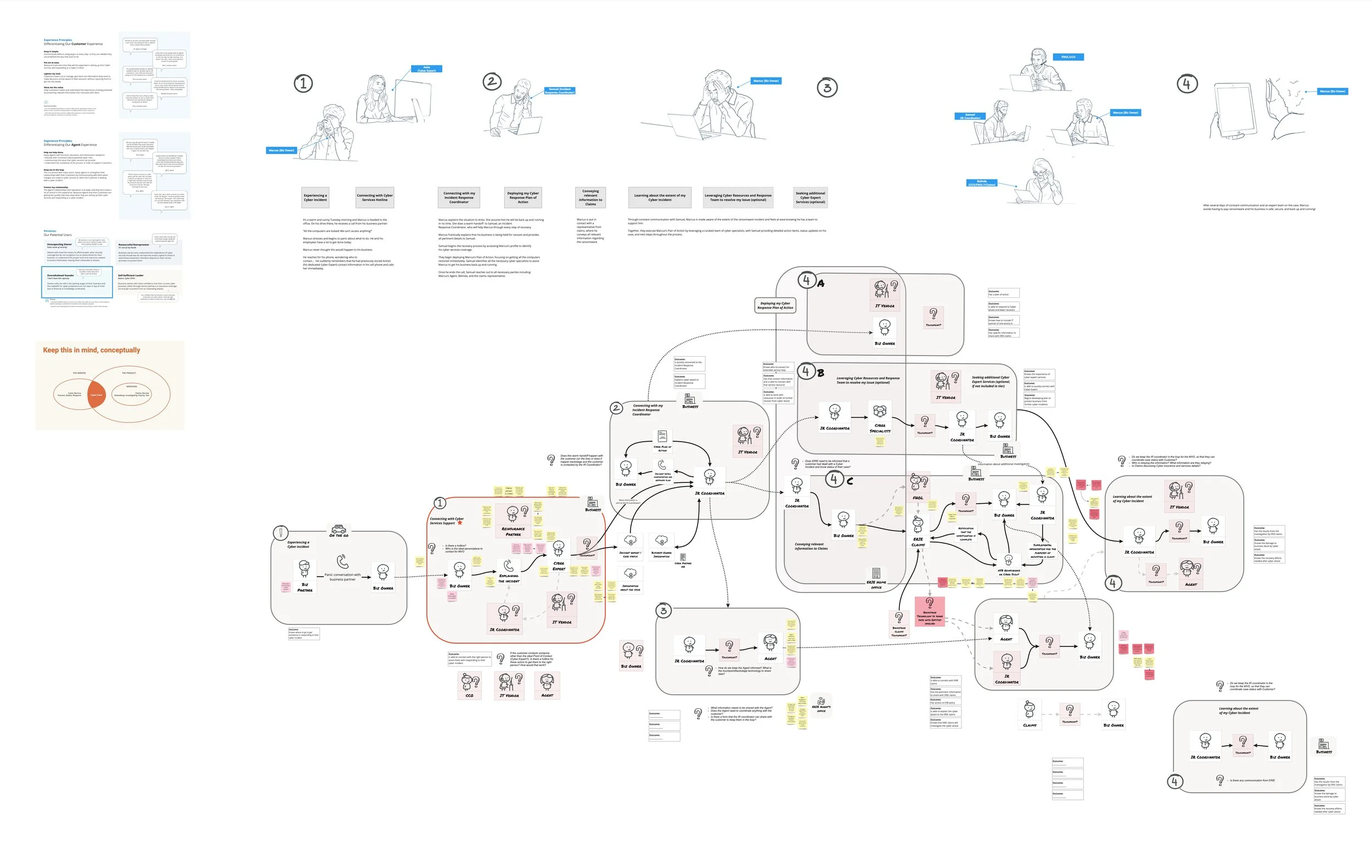
Facilitating service origami to work out the complexity in moments where multiple actors are interacting. The service origami was used to generate dialogue and to align on the ideal way to handle claims that may arise from a cyber incident.
Partnering with a 3rd party cybersecurity vendor to co-design the service and be the service delivery partner for the Cyber Assessments and Consultations.
Evaluative Research: The pilot leading up to implementation was focused on two specific phases of the service within the end-to-end experience.
1:1 virtual research was conducted with small-medium businesses and Insurance Agents to understand responses to the end-to-end service as designed and help fill in gaps about expectations around distribution, cost, billing, and how the service fits into their respective businesses to refine the service.
Implementation
The idea was to break functional silos, and gain alignment and input early so that the development of the capabilities would benefit. In turn, we would end up with a more continuous and consistent experience.
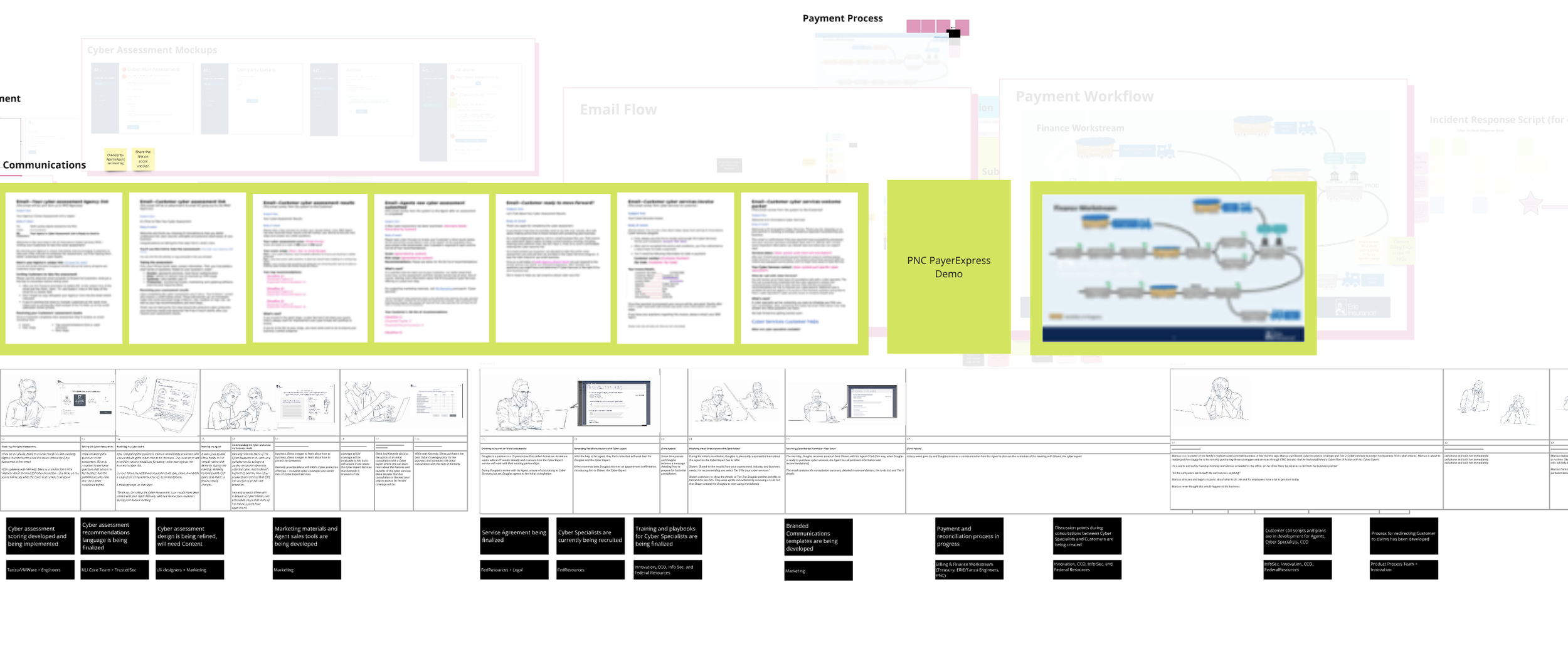
Capability identification: Blueprints were used to identify capabilities that would be needed to build the experience. These capabilities were then organized into experiential groupings that seeded the identification of workstreams.
Workstream planning: Building the capabilities to enable the service ground up would take a concerted effort of several cross-functional groups working in parallel. The idea was to break functional silos, and gain alignment and input early so that the development of the capabilities would benefit. In turn, we would end up with a more continuous and consistent experience.
Capability definition/refinement: Before beginning the implementation work, capabilities needed to be well-defined so that we knew what needed to be built and which teams were responsible for the development of the capabilities. This step required cross-functional input to determine which capabilities were new to the organization, which were existing capabilities that could be leveraged as-is, and which ones could be used but with adjustments to fit the new context.
Further definition of the service: Once capabilities were identified, the workstreams each further detailed the pieces of the blueprints needed to be effective in developing the capabilities they were responsible for.
Rough-cutting: Inspired by Patrick Quattlebaum's (CEO @ Harmonic Design) book Orchestrating Experiences, workstreams were brought together to share in-flight implementation work with the goals of identifying dependencies across workstreams, surface potential issues, discuss trade-offs, and build a sense of teamwork across the workstreams. This method allows for balancing the team moving quickly on their parts while ensuring a coherent whole that maintains experience intent.
Initial launch followed by parental leave
The service eventually made it to the hands of the 15 Agents who had been selected to partake in the launch of the minimum viable service. After some iterations of fine-tuning marketing materials, refining the experience with the service delivery partner, and marketing blasts to customers of those agencies, there were still no bites.
We designed a study to test the offering as a direct-to-customer offering.
This is around the time I transitioned off of the project to take time off to be a new dad (Feb 2023).
Second launch D2C (May 2023)
With the refinement of the core consultation experience, and trying a new market and new Agents entirely, 1 customer signed up. However, Agent adoption and prioritization of selling this continued to be a challenge.
The product development team then began deciding between selling this with the Agents (as an addition to the insurance offering) and making the case to sell directly to the customer.
The first of its kind to come out of this type of work at the organization!
Joint venture (mid-2024)
A mutually beneficial partnership agreement was developed with the delivery partner aimed at solving the sales issues and working together to unlock revenue potential. The first of its kind to come out of this type of work at the organization!
Learning our way through complexity
The implementation and launch of this service was the first of its kind in the organization. This layered on some complexity to the implementation work that we needed to navigate through design methods and partnership building.
Ways of working
Taking a cross-functional approach to developing a new experience was unfamiliar territory to the greater organization. A combination of top-down buy-in and creating trusted partnerships through doing good work led to people seeing the value of working in these ways.
Language
We constantly worked on getting internal collaborators to think in non-insurance terms and “experience”. The concept of insurance “products” was heavily ingrained and took a lot of effort to steer clear of confusion. The issue became less pronounced over the course of the project, with the organization being exposed to this work.
Understanding the difference between a minimum viable service offering and a pilot and that an MVS is a "whole" or "complete" experience and offering, but is not as broad or as deep as it may eventually be, created challenges to adoption from Agents and those who trying to convince Agents to sell this.
Guarded relationships
We navigated the delicate relationship between independent insurance agents and the organization. Traditionally, the agent is consulted as a proxy of their customer base. We built partnerships with district sales teams to interact directly with agents and select customers from their book of business.
Similarly, selling directly to customers is a concept that faces a lot of pushback from company leadership. This meant showing that the Agent route was not a feasible option while also (covertly) proving the value in the service to businesses.
Operational constraints
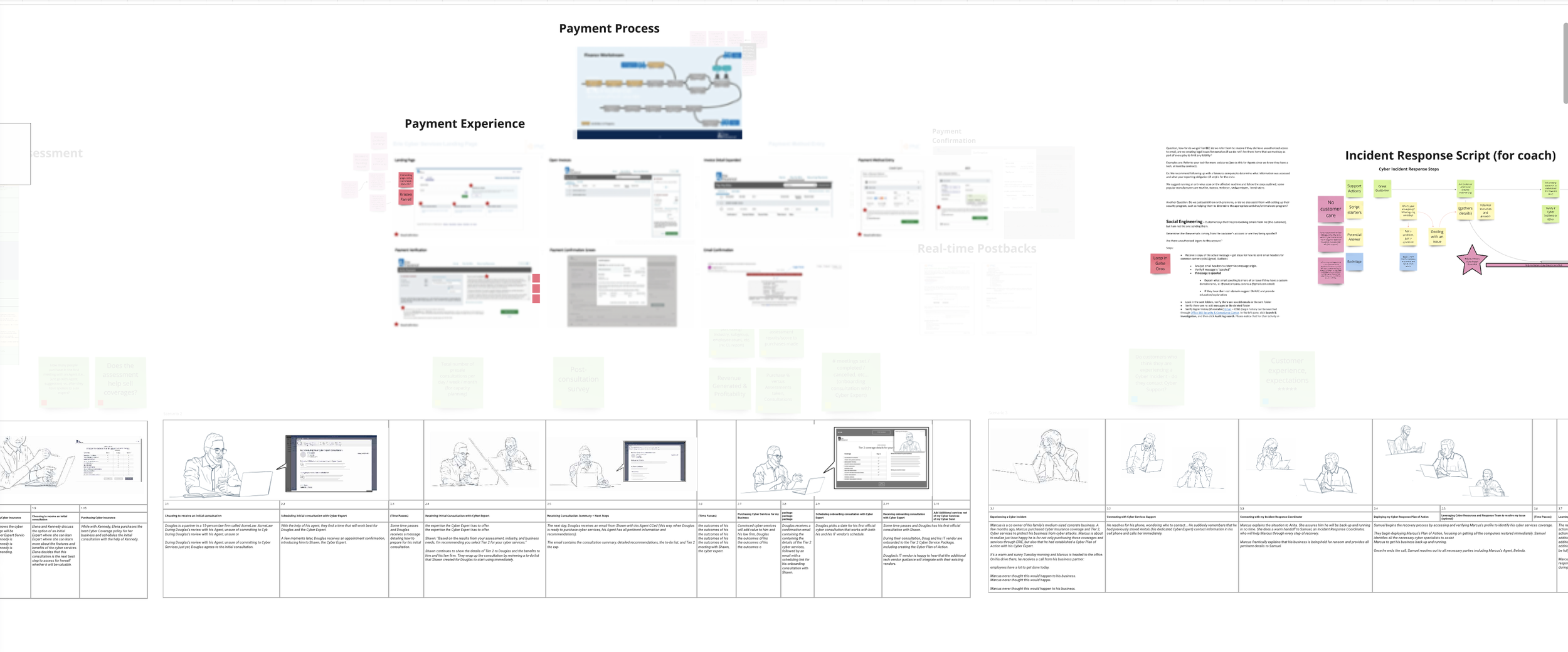
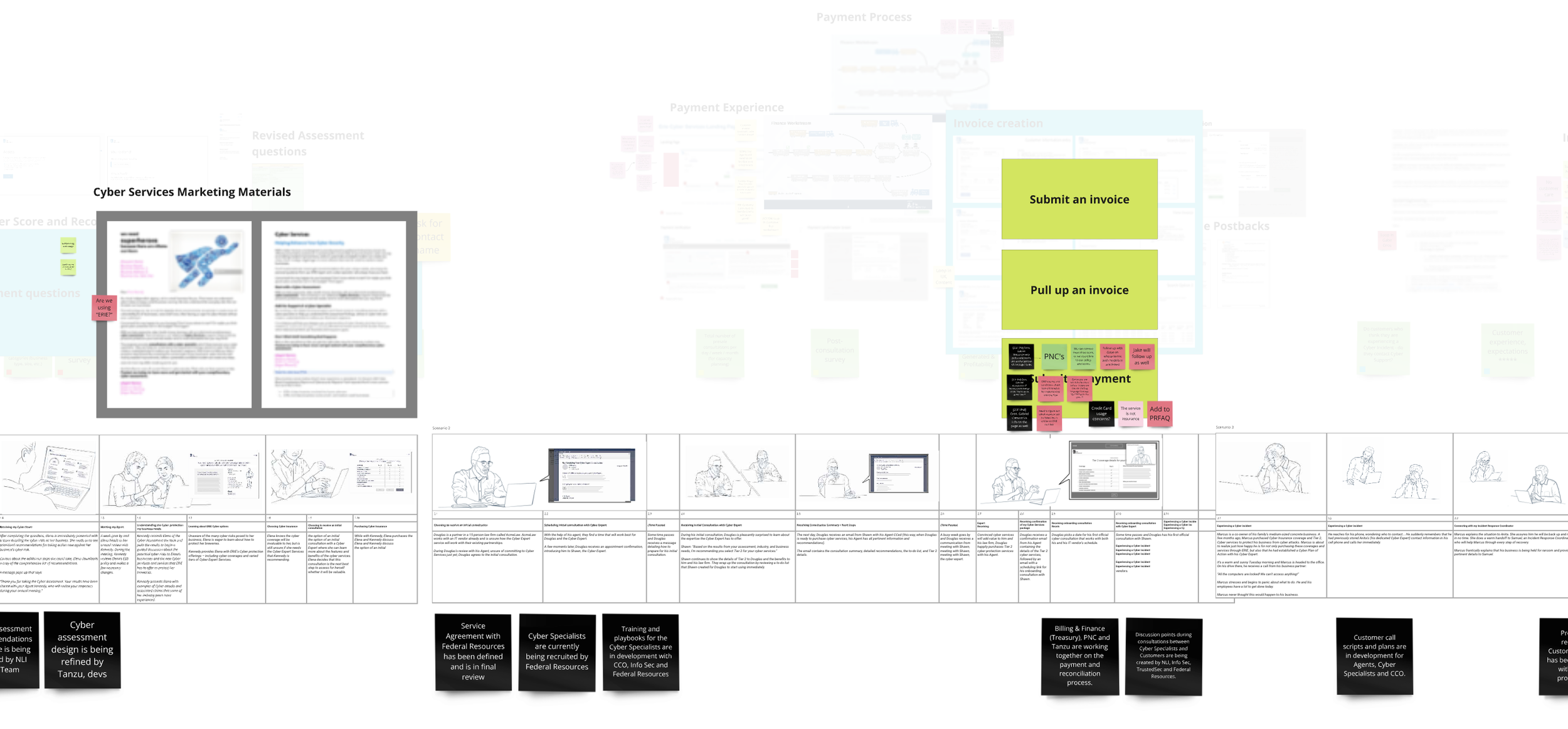
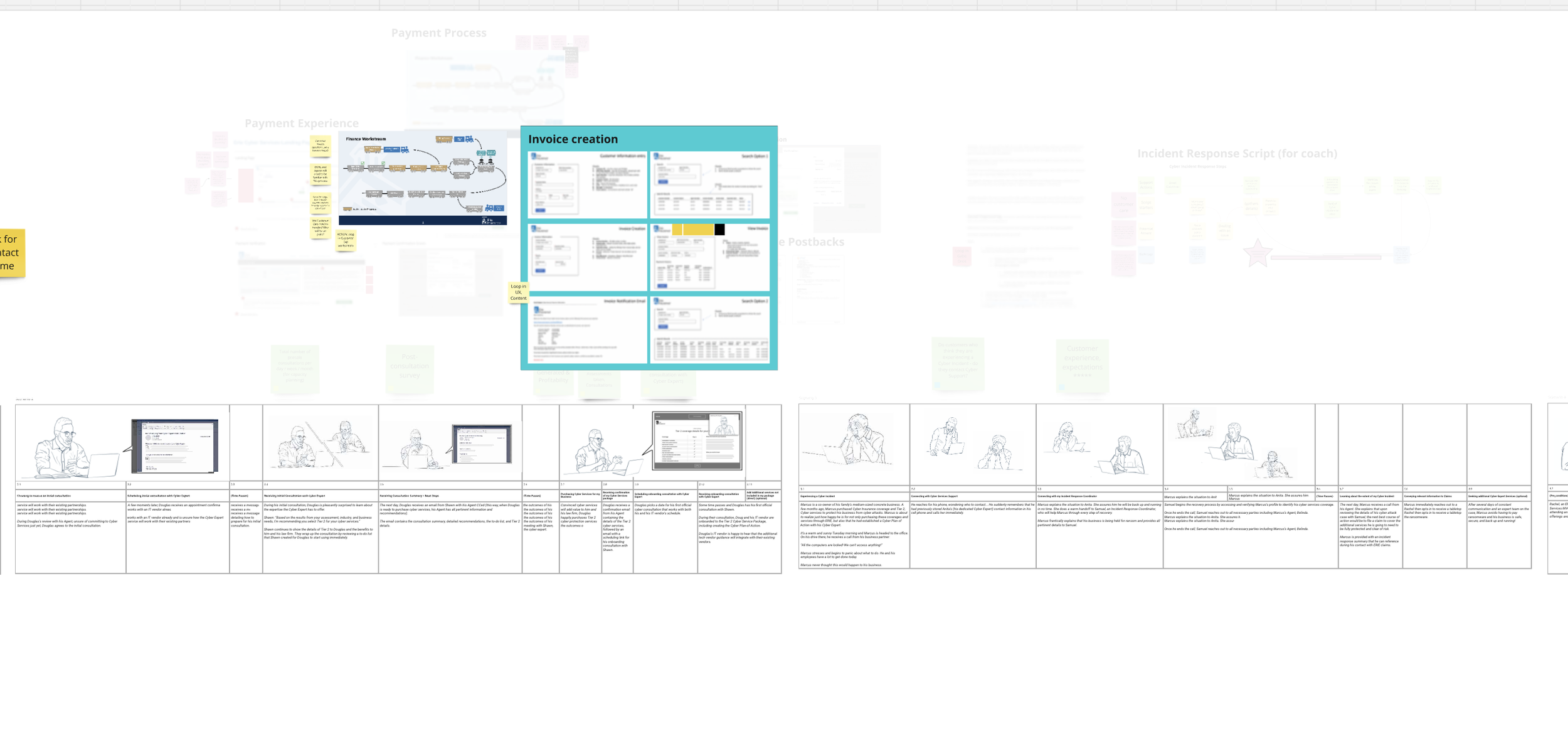
The team was constrained to not disturb “core” insurance operations. Accelerating the roadmaps of functional groups was no longer possible. This led to us partnering with different functions in the organization to build workarounds that were separate from the insurance operations. e.g., the development of a payment experience leveraging a 3rd party vendor to not disrupt the insurance customer payment systems.
Limited availability of other business functions to dedicate time to the development of the work in-house, especially marketing, and challenges in going outside the organization impeded agility of creation of new service capabilities. The maturity of execution work was limited to what was available in-house.
We discovered through Agent research that there is a lack of infrastructure and systems to sell non-insurance offerings. This was at odds with Agents being the preferred distribution channel. Agencies are built around selling insurance and are incentivized based on insurance sales performance. Unpacking this finding from Agent research and internal conversations led us to make a case for Direct-to-Customer
Work Snapshots
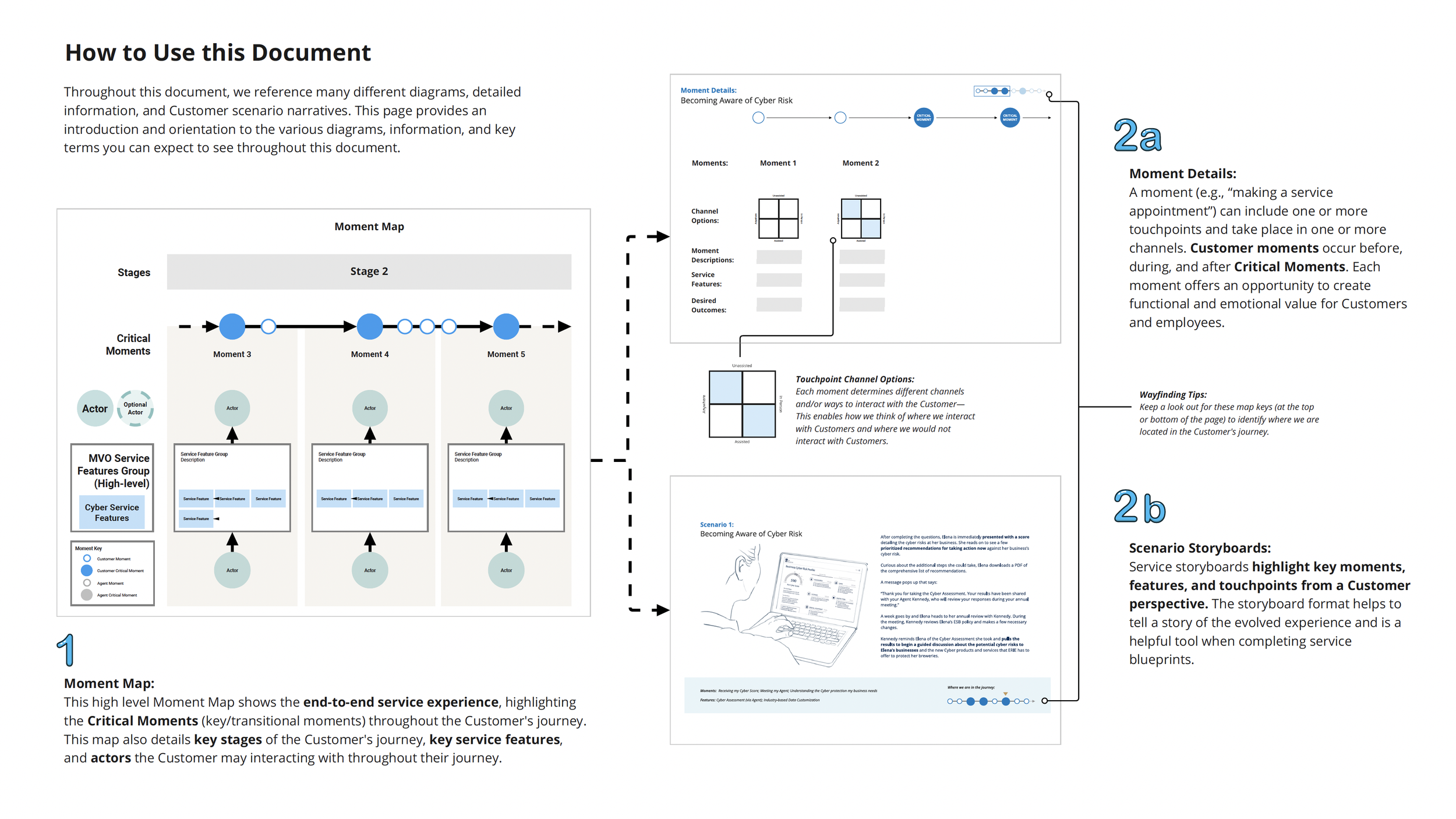
Moment architecture: once the journey model was determined, each moment of the experience was detailed with outcomes (emotional, social, functional) and possible channel options.
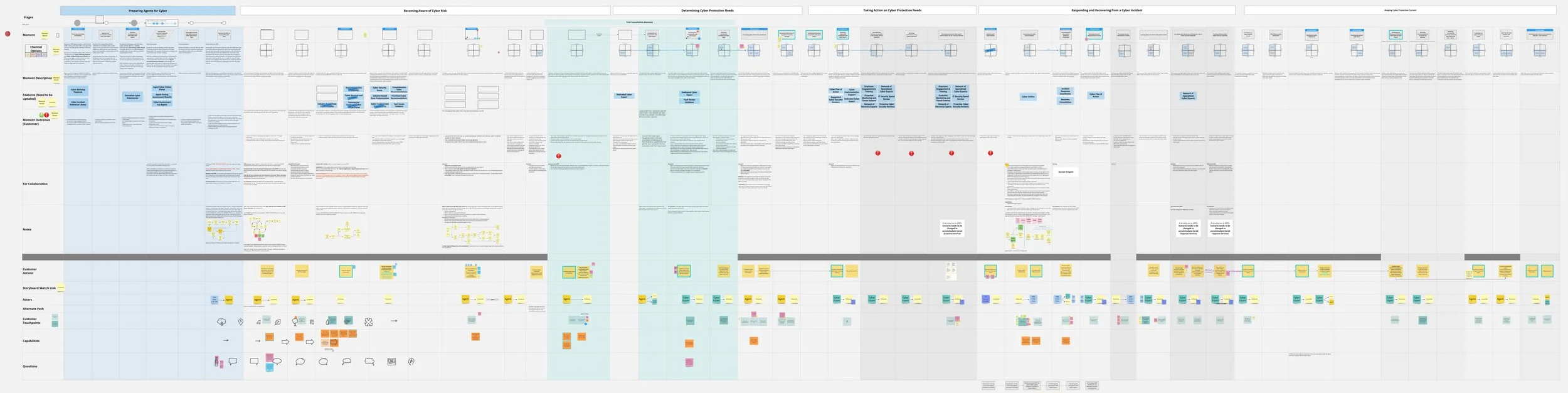
A blueprinting onboarding tool was created to serve as the foundation for building the blueprints for the MVO. The tool included the moments’ details in context of the journey model and the service narrative. There were a total of 4 scenarios.
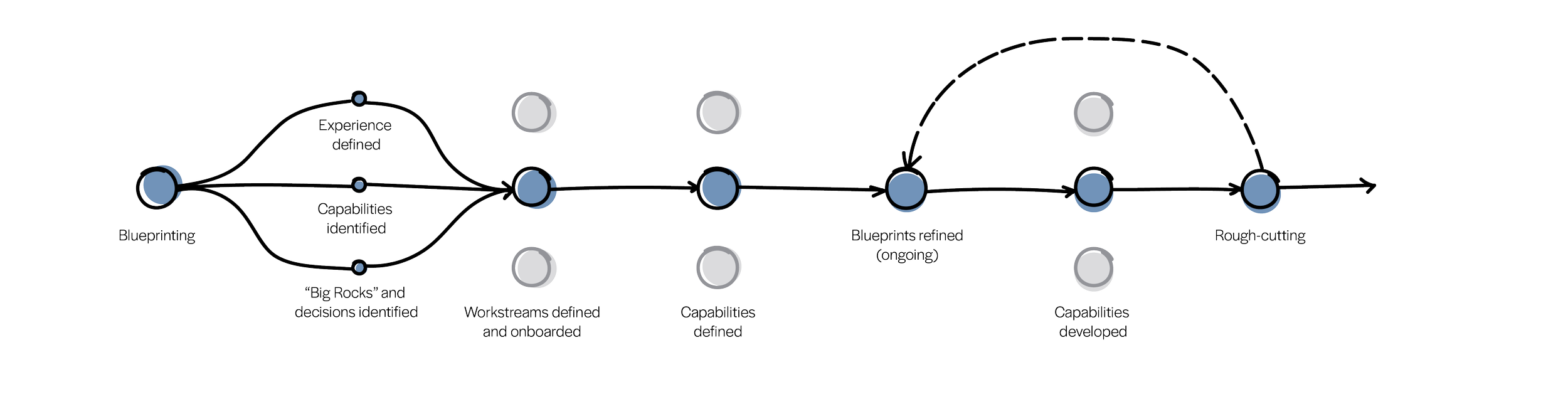
Implementation Approach
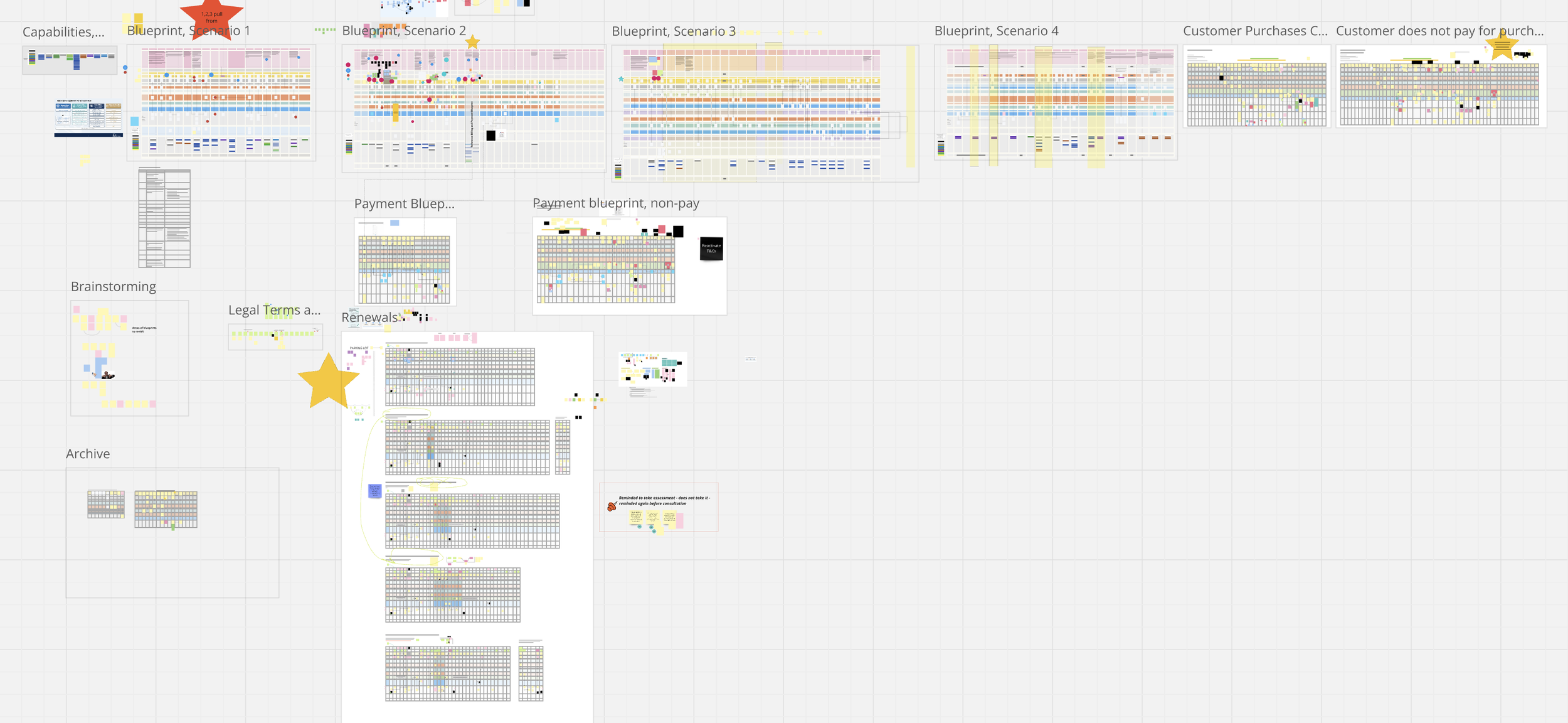
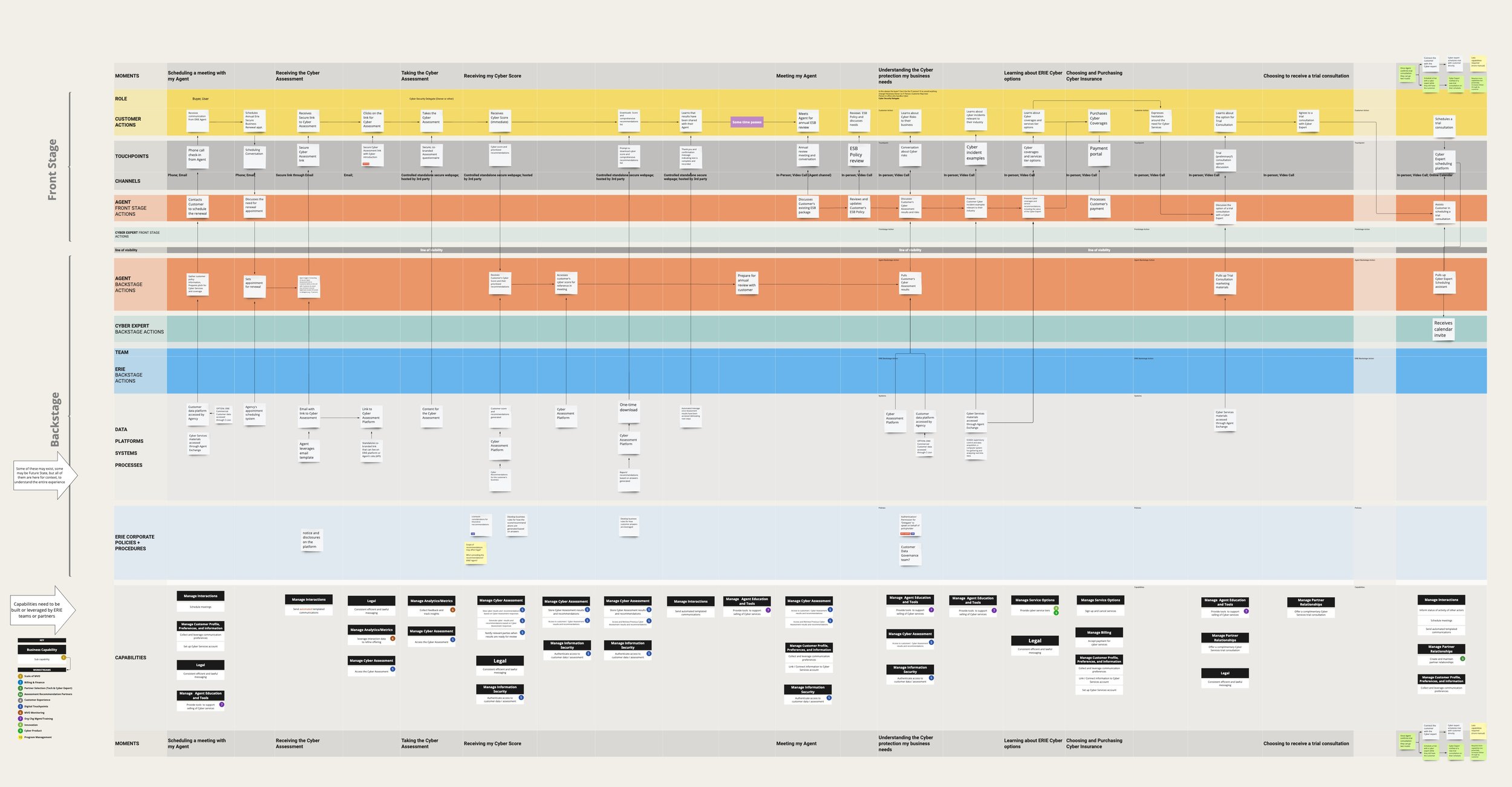
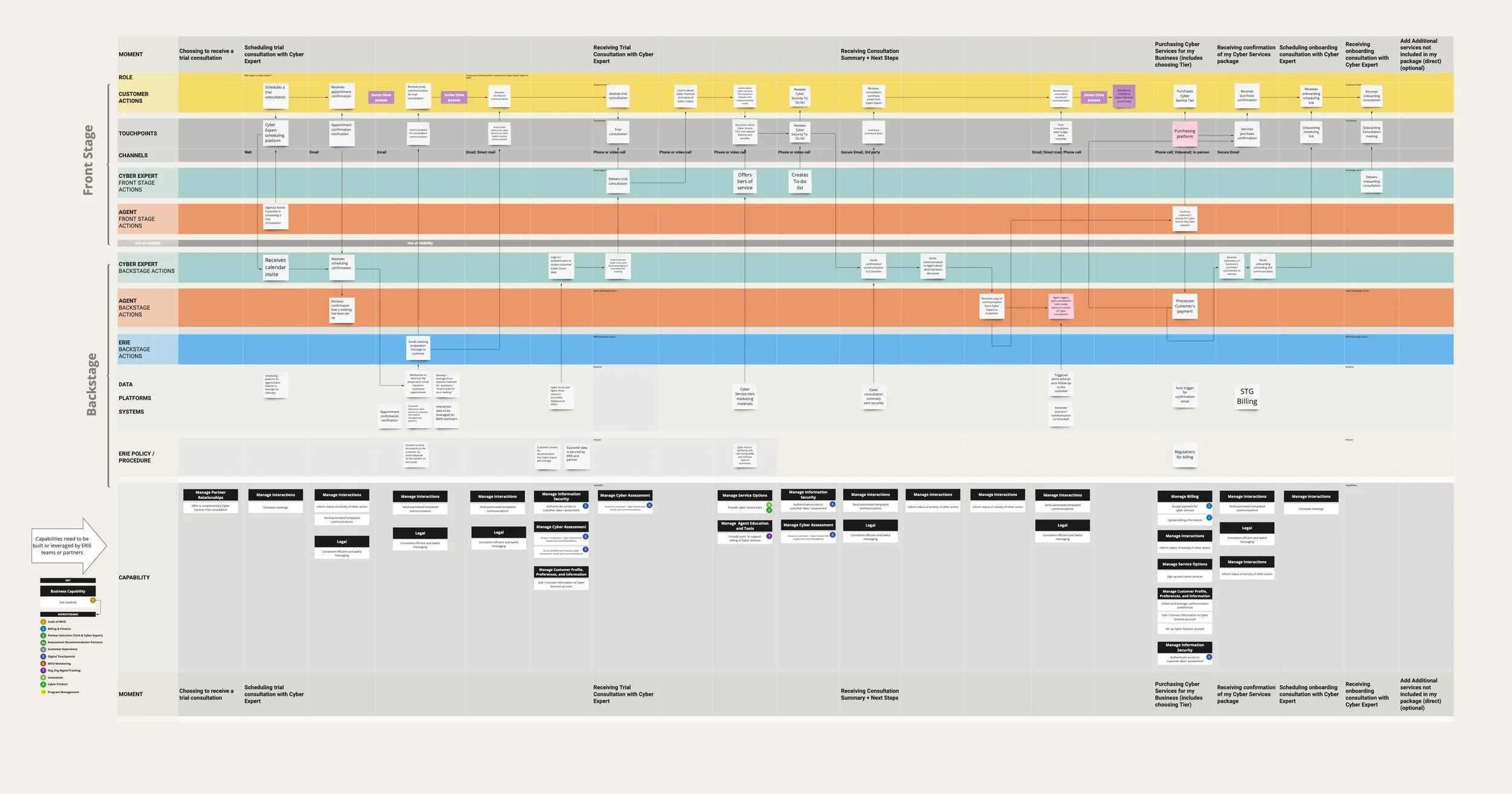
Blueprinting…lots of it! Facilitated blueprinting sessions led to the creation of detailed blueprints for each scenario.
The blueprints served as living tools for the course of implementation. Workstreams expanded on and revisited the blueprints while the service was being shaped and developed.
A version of service origami was employed to untangle the interplay with insurance in situations where a customer needs to file a claim.
It served as a visual way to work through the complexity of these moments and helped determine the ideal order of operations.
The origami served as the scaffolding for the blueprint.

Workstream onboarding: Each cross-functional workstream was onboarded individually. The goal of the onboarding was to help them understand their work in the context of other work underway, who all were part of their cross-functional team, and to familiarize them with what the service was dependent on from this workstream.
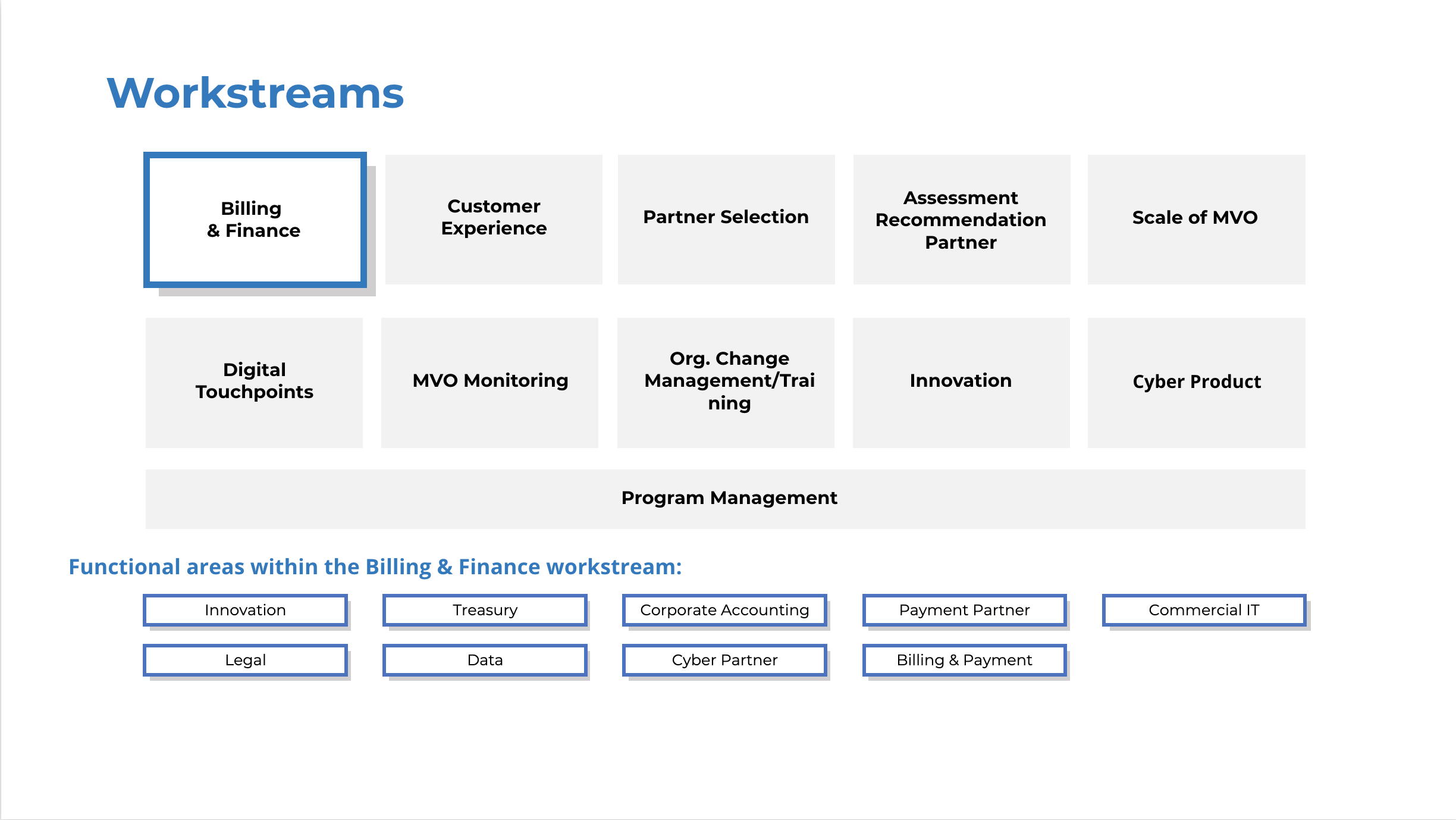
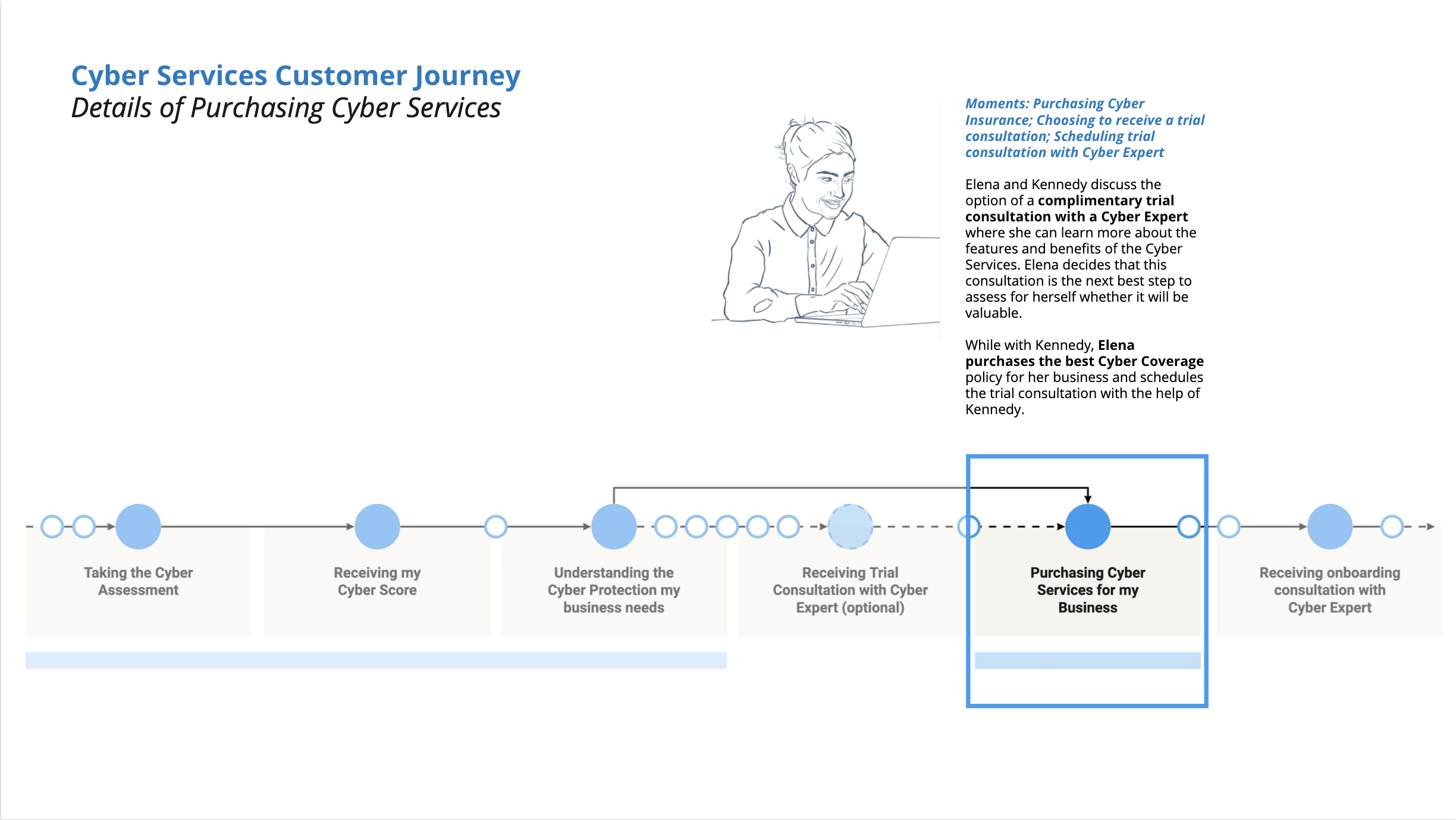
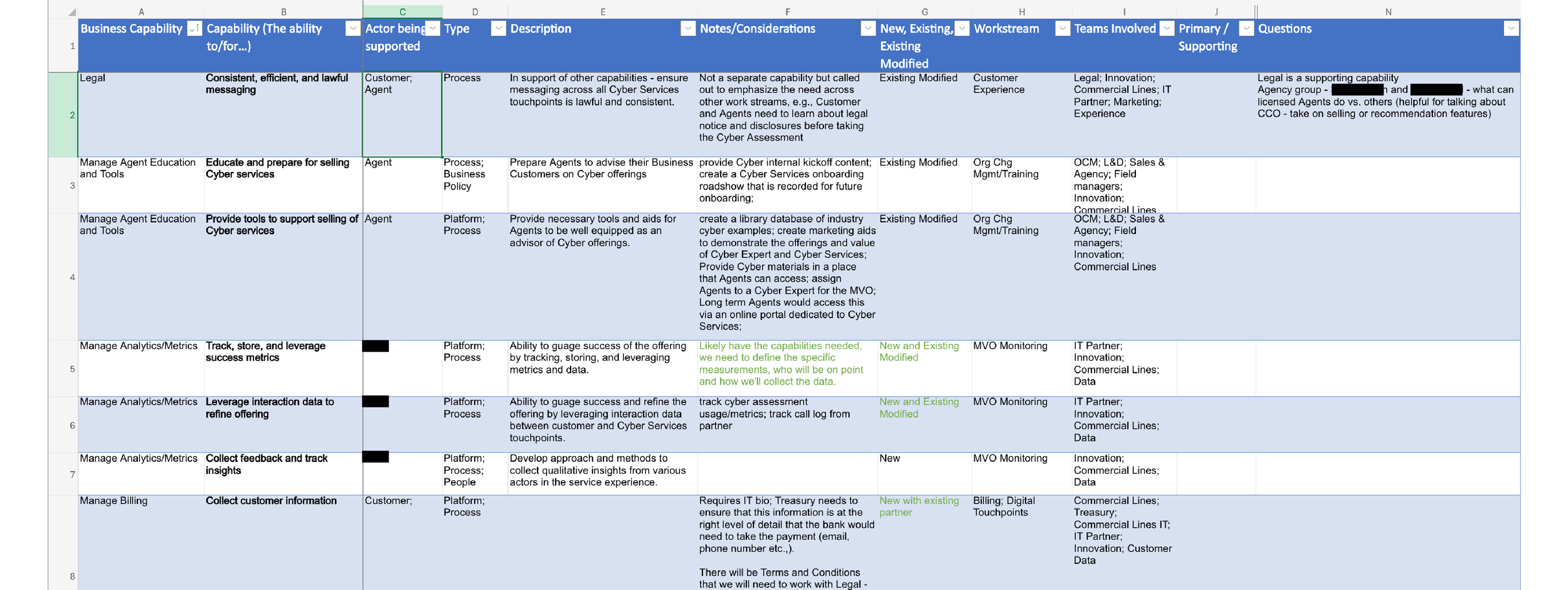
Each workstream was engaged to further define capabilities identified while blueprinting. These cross-functional teams discussed the details and scope of each relevant capability.
A total of 50 capabilities were defined to build the service across 10 workstreams.
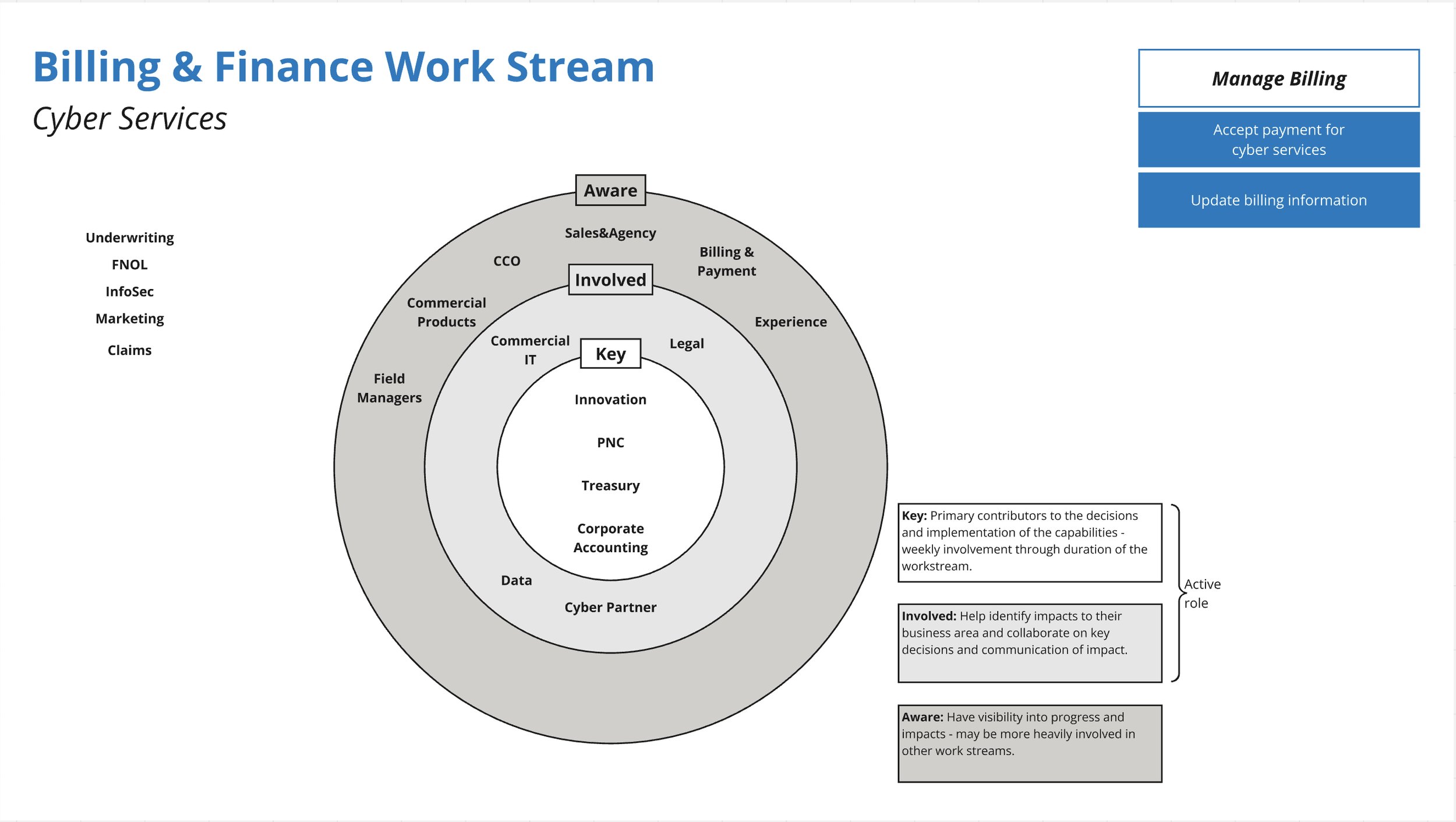
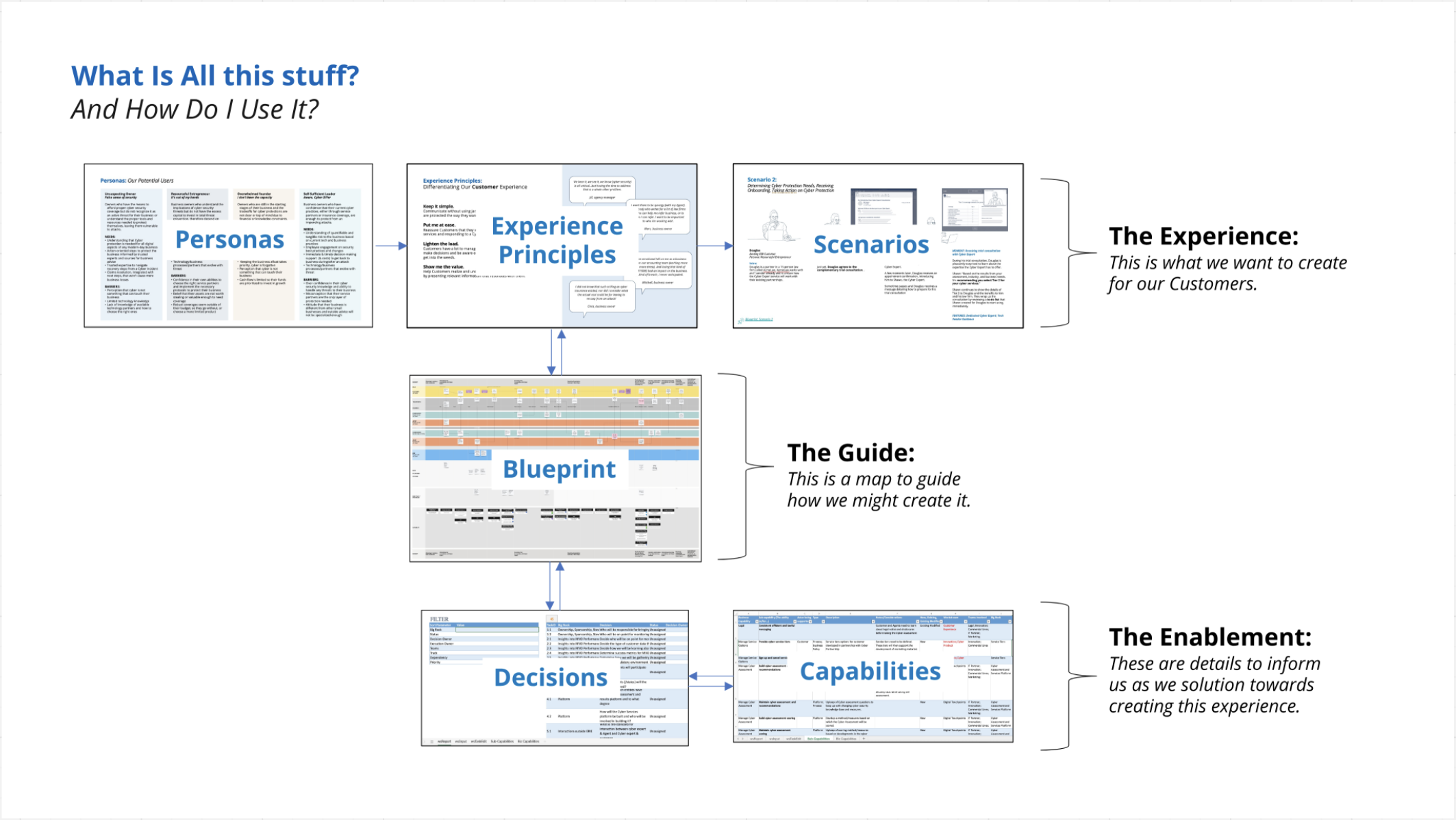
Rough cutting provided a space for workstreams to share work under development – grounded in the experience being developed.
The forum empowered workstreams to understand the interdependencies of work in progress and its impact to the experience.